
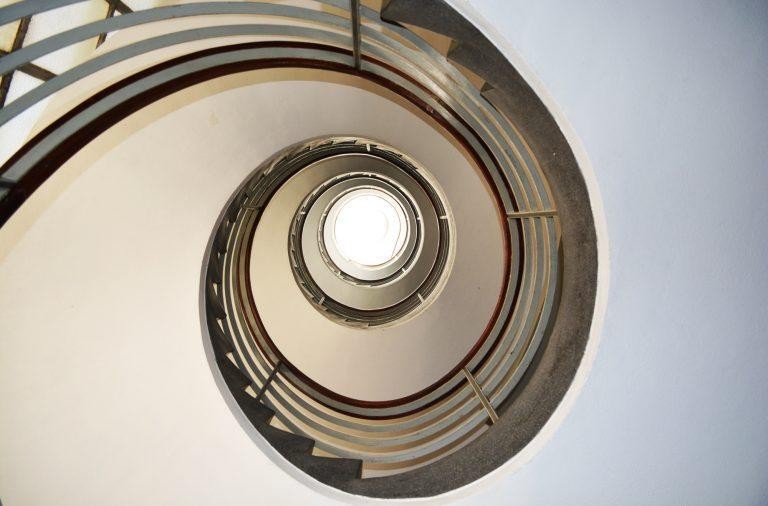
There is something deeply poetic about the way Portugal builds. In a country where light shapes the landscape and the ocean defines the scale of things, architecture has never simply been about putting up walls. It has always been a conversation with the land, with history and with light.
Today, Portuguese architecture is one of international design’s most celebrated open secrets. But what makes its architectural language so distinctive and so widely recognised beyond its borders?
1. A unique balance of modernism and tradition
Contemporary architecture in Portugal does not reject the past; it embraces it. The strength of this architectural identity lies in its ability to bring traditional materials — limestone, wood, tiles and plaster — into clean, functional, minimalist forms.
These are not buildings that demand attention. They are structures that seem to have always belonged, in perfect harmony with the land beneath them.
2. The masters’ touch: international recognition
Few countries of such a small size can count two Pritzker Prize winners among their architects — an award often described as architecture’s equivalent of the Nobel Prize.
- Álvaro Siza Vieira: the master of poetic minimalism. His work taught the world to look closely at topography and to use natural light as though it were a living building material.
- Eduardo Souto de Moura: celebrated for his rigorous precision, his instinctive understanding of materials and his ability to make the monumentality of stone feel light and welcoming.
Alongside these names, a new generation of talented studios continues to carry the rigour and sensitivity of Portuguese design around the world.
3. The art of light and human scale
If there is one area in which Portuguese architects excel, it is the geometry of light. Windows frame landscapes, shadows play across internal courtyards, and fluid connections between indoors and outdoors create spaces of remarkable brightness and serenity.
Portuguese architecture also designs for people. It works at a human scale, creating spaces to be lived in, felt and quietly contemplated in comfort.
4. Sustainability by nature, long before it was a trend
Long before sustainability became a global watchword, Portuguese vernacular architecture practised it intuitively. Thick walls that keep interiors cool in summer, careful orientation towards the sun, cross-ventilation and the use of local resources have always been part of the country’s building tradition.
Today, that inherited knowledge is combined with advanced technology to create efficient, lasting and environmentally conscious projects.
A timeless signature
To build or live in a home shaped by Portuguese architecture is to inhabit a piece of functional art. It is a celebration of discreet detail, quiet luxury and an elegance that does not go out of style.
In Portugal, architecture does more than occupy space. It gives it meaning.
One of its most iconic, poetic and ingenious details is the relationship between the sea view and the pools at the Piscinas de Marés in Leça da Palmeira, designed by Álvaro Siza Vieira between 1961 and 1966.
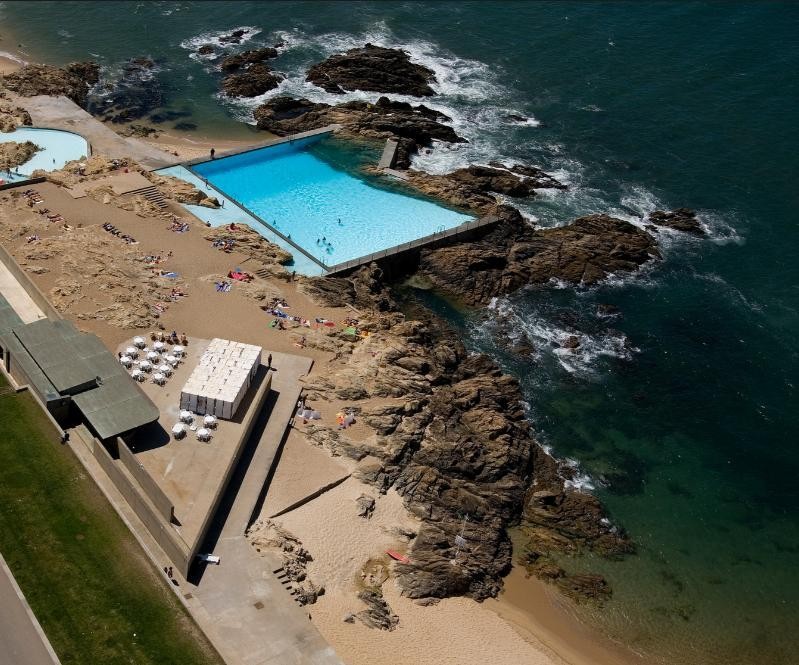
The detail: a cut through the rock, a mirror of water
Instead of placing a building on the coast, Siza carved the architecture into the rock itself.
The most fascinating detail lies in the route through the building and the way the water is framed:
- The transition from shadow to light: entry is through a dark passage of concrete and wood. As you walk, a low horizontal opening guides your eye, cutting across the horizon and gradually revealing the Atlantic.
- The meeting of concrete and rock: the pools are not enclosed by conventional walls on every side. In several places, raw concrete meets the beach’s dark granite directly. It becomes difficult to tell where nature ends and human intervention begins.
Why is it so special?
This detail captures the essence of the Porto School: absolute respect for topography and the luxury of the essential. Siza Vieira did not try to dominate the ocean or the landscape. He used raw concrete to create a filter that embraces the sea, sheltering swimmers from the force of the waves while keeping them immersed in nature.
It is a detail that is at once brutalist and extraordinarily delicate — internationally recognised as one of the twentieth century’s great examples of architecture integrated into its landscape.